
How to Avoid the Wrong Agent: How to Find a Top Local Real Estate Specialist (No Matter What State You Are In) (Preview of our automated matching tool below. Click the link to get started!)We ensure

Dated: February 6 2026
Views: 12
Here’s What to Know (and How to Prepare)
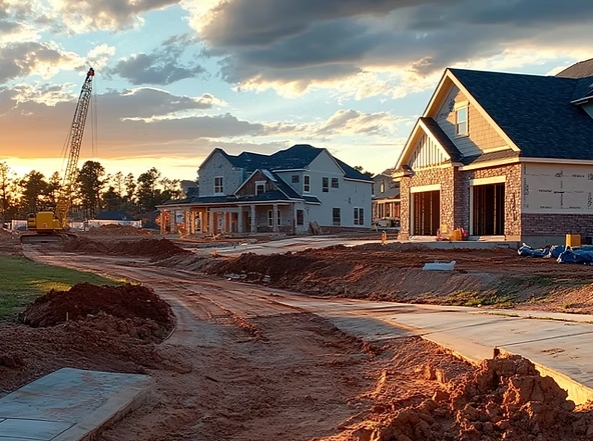
If you live in a growing part of Texas, you’ve probably seen it happen: a quiet field cleared, heavy machinery rolled in, and signs announcing a shiny new subdivision with “Modern Homes Coming Soon!”
You ask yourself:
What’s going to happen to our traffic? Our home value? Our neighborhood feel?
You’re not being paranoid—you’re being smart.
Growth always brings change. But if you understand how to navigate it, that change doesn’t have to be negative.
This one’s obvious—and often the most frustrating. A new subdivision means:
More cars on your street
More competition during rush hour
Possible school drop-off bottlenecks
Potential overflow parking during construction
Look into your city’s traffic studies and road plans (many are public)
Watch for planned lights, turn lanes, or widened roads—these can actually improve long-term flow
If you’re thinking of selling, prepare buyers with accurate commute times and tips—not surprises
It’s not just about traffic—it’s about capacity.
Ask yourself:
Will this affect water pressure, internet speed, or school enrollment caps?
Is your area zoned for commercial growth alongside the residential build?
Will there be new traffic lights, sidewalks, or highway on-ramps?
Check with your city’s planning department or zoning board
Realtors can access projected growth maps—ask for one to see how your neighborhood fits in
Share this info with potential buyers—it shows you’ve done your homework and builds trust
The big question. Will this help or hurt your home value?
If the new subdivision includes higher-end homes, it may lift your value
If the new homes are cheaper or mass-produced, it could make yours feel overpriced in comparison
If they’re similar in size, price, and age, buyers may favor “brand new” unless your home has upgrades or stronger curb appeal
Compare square footage, finish-outs, and builder incentives
Price your home strategically—not emotionally
Consider upgrading key features (like kitchens, bathrooms, or energy efficiency) if you plan to sell soon
Use staging and listing photography that communicates character, not just square footage
If the subdivision adds hundreds of new homes, that could mean:
Rezoning of school boundaries
Overcrowded classrooms
Or in some cases—a new school being built nearby
Keep an eye on ISD announcements and rezoning proposals
For sellers: highlight your home’s current school zoning and include resources
For homeowners: ask your local school board about capacity planning if you’re concerned
Maybe your street was peaceful and private. Maybe you liked having open land next to you. That’s changing now. But it’s not all bad.
A new subdivision might bring:
New shops, restaurants, or parks
Increased delivery or city services
A more robust local economy
More eyes on your neighborhood—making your home easier to sell if priced right
A new neighborhood doesn’t have to mean your old one loses value. It just means you need to be proactive, not passive. Ask questions. Gather information. And if you’re thinking of selling—position your home with strategy, not fear.
Growth is coming. The question is:
will you let it work against you—or will you use it to your advantage?
📞 903-603-0648

Amanda Allen is a seasoned real estate professional with nearly a decade of experience helping buyers and sellers navigate the residential market with confidence and clarity. Licensed since 2017, Aman....
How to Avoid the Wrong Agent: How to Find a Top Local Real Estate Specialist (No Matter What State You Are In) (Preview of our automated matching tool below. Click the link to get started!)We ensure
When the economy starts to look rocky, the natural instinct for many buyer investors is to pull back, hoard cash, and wait out the storm. But seasoned investors know that market downturns aren't
While Texas is famously a "non-disclosure" state, there is a common misconception that your financial footprint is invisible. In reality, while the final sales price isn't a matter of public record
Why a "Bulldog" approach to Texas land-use data is the only way to protect your backyard from the quiet encroachment of developers. Times change and with it so does land use. Let's take
 © 2026 North Texas Real Estate Information Systems, Inc. All rights reserved. Disclaimer: All information deemed reliable but not guaranteed and should be independently verified. All properties are subject to prior sale, change or withdrawal. Neither listing broker(s) nor M&D Real Estate - Rockwall shall be responsible for any typographical errors, misinformation, misprints and shall be held totally harmless. The database information herein is provided from and copyrighted by the North Texas
Real Estate Information Systems, Inc. NTREIS data may not be reproduced or redistributed and is only for people viewing this site. All information provided is deemed reliable but is not guaranteed and should be independently verified. The advertisements herein are merely indications to bid and are not offers to sell which may be accepted. All properties are subject to prior sale or withdrawal. All rights are reserved by copyright.
Data last updated: September 19, 2026 9:33 PM UTC
Show More...
© 2026 North Texas Real Estate Information Systems, Inc. All rights reserved. Disclaimer: All information deemed reliable but not guaranteed and should be independently verified. All properties are subject to prior sale, change or withdrawal. Neither listing broker(s) nor M&D Real Estate - Rockwall shall be responsible for any typographical errors, misinformation, misprints and shall be held totally harmless. The database information herein is provided from and copyrighted by the North Texas
Real Estate Information Systems, Inc. NTREIS data may not be reproduced or redistributed and is only for people viewing this site. All information provided is deemed reliable but is not guaranteed and should be independently verified. The advertisements herein are merely indications to bid and are not offers to sell which may be accepted. All properties are subject to prior sale or withdrawal. All rights are reserved by copyright.
Data last updated: September 19, 2026 9:33 PM UTC
Show More...
